Boogie Cat Font: A Creative Must-Have
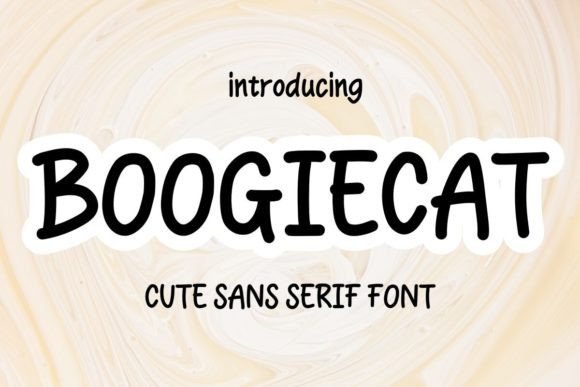
There I was, tracing the edges of a candle label with my pen, trying to find the perfect font to match the whimsical vibe of my latest batch of soy candles. That’s when I discovered Boogie Cat—a cute and cool sans serif font that instantly brought my vision to life.
Boogie Cat has this playful yet polished look that feels just right for handmade products. Its rounded letters and subtle curves give it a friendly, approachable feel, while the clean lines keep it modern and versatile. Whether I’m designing a birthday invitation or adding text to a farmhouse sign, Boogie Cat always seems to fit the mood.
Using Boogie Cat in Handmade Projects
One of the first things I tried was using Boogie Cat on candle labels. The font’s soft edges made the text look like it was hand-drawn, which gave my products a more personal touch. I also used it on greeting cards, where its readability and charm helped elevate the overall design. For a wedding invitation, I paired Boogie Cat with a simple serif font to add contrast and depth without overwhelming the layout.
When I designed a set of printable wall art, Boogie Cat was the obvious choice. Its bold yet delicate style worked perfectly for titles and decorative elements. I found that it looked great in both large and small sizes, making it ideal for everything from packaging tags to digital downloads.
Boogie Cat for Shop Branding and Packaging
As I started building my shop brand, I realized how important consistent typography was. Boogie Cat became a key part of my visual identity. I used it on product tags, packaging, and even social media graphics. The font’s versatility allowed me to maintain a cohesive look across all platforms without feeling repetitive.
I also experimented with Boogie Cat on tote bags and mugs. The font’s clarity made it easy to read, even when printed in small sizes. For stickers and labels, I appreciated how it held up under different printing methods—whether I was using a laser printer or an inkjet machine.
Practical Tips for Using Boogie Cat
When working with cutting machines like Cricut or Silhouette, I made sure to test Boogie Cat at various sizes. It performed well on small stickers and labels, but I avoided using it for long paragraphs. The font is best suited for short phrases, names, and titles, where its personality can shine through.
For digital printables, I found that Boogie Cat worked well with a variety of design elements. I paired it with a script font for headers and a bold display font for accents. This helped create visual interest without clashing.
Before using Boogie Cat for commercial purposes, I checked the licensing details. Since it’s a free font, I made sure it was allowed for both personal and commercial use. I also verified that it included multiple weights and styles, which gave me more flexibility in my designs.
Boogie Cat in Action
During the holiday season, I used Boogie Cat on gift tags and seasonal signs. The font’s cheerful look added a nice touch to my handmade ornaments and wreaths. I also created a set of printable holiday cards, where Boogie Cat was the perfect complement to the warm, festive illustrations.
Another project I worked on was a set of boutique tags for my shop. Boogie Cat made the text stand out without being too flashy. I loved how it looked on both white and colored paper, and it worked equally well with simple or detailed backgrounds.
Final Thoughts on Boogie Cat
Boogie Cat has become an essential part of my creative toolkit. Its unique blend of charm and clarity makes it ideal for a wide range of handmade projects. Whether I’m designing a greeting card, creating a digital printable, or labeling a product, Boogie Cat always adds that extra bit of personality.
If you’re looking for a font that’s both fun and functional, Boogie Cat is definitely worth trying. As a free font, it offers a lot of value for crafters and small business owners who want to elevate their designs without breaking the bank.